The amount and distribution of connective tissues and the size of both muscle fibers and bundles of fibers determine the tenderness of meat.
Meat can be tenderized by the use of natural and artificial tenderizers. The tenderizing action results from the hydrolysis of the amide linkages of the protein in the meat. Most powdered tenderizers use the plant enzyme papain as the tenderizing agent. The art of using enzymes for tenderizing meat is an old one. Wrapping of meat in papaya leaf before cooking results in tenderization.
Commercial papain sprinkled on the surface of meat penetrates to a depth of 1 mm per hour. In general tenderizers work on the surface of the meat.
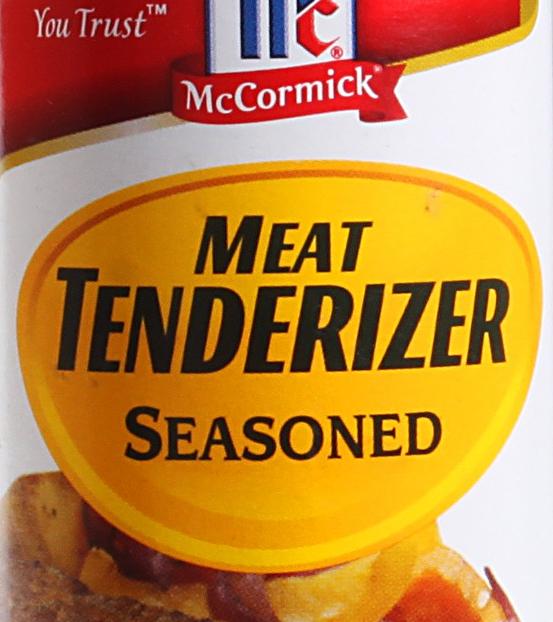
Some enzymes treat the muscle tissue and others treat the connective tissue. For example, the enzymes chymopapain, or papain and ficin exert a greater effect on tenderising muscle fibers than connective tissue, while bromelain degrades connective tissue more than the myofibrils.
Meat tenderizers enzymes extracted from a number of plants, including papaya, pineapple fig, kiwi and ginger.
The enzymes act slowly at refrigerator or room temperature, and some five times faster between 60 and 70°C, so nearly all the tenderizing action takes place during cooking. Exceeding 85 °C denatures the enzyme, thus inhibiting its activity.
Some of the best tenderizers for meats have an alcohol base as beer and hard coder. The fermentation chemical process gives these products the tenderizing quality.
Tenderizing meat by enzymes


