Chelation has its origin in the Greek word chele that means claw of a lobster, thus depicting the concept of clinging or holding with a strong grip. The term chelate was first applied by Sir Gilbert T. Morgan and H. D. K. Drew in 1920.
A chelate is a chemical compound composed of a metal ion and a chelating agent. A chelating agent are organic or inorganic compounds whose molecules can form several bonds to a single metal ion. In other words, a chelating agent is a multidentate ligand.
Chelating agents are capable of binding to toxic metal ions to form complex structures which are easily excreted from the body removing them from intracellular or extracellular spaces.
An example of a simple chelating agent is ethylenediamine. Porphine is a chelating agent similar to ethylenediamine in that it forms bonds to a metal ion through nitrogen atoms.
Phosphonates are used as chelating agents in many applications. In medicine phosphonates are used to chelate radionuclides for bone cancer treatments and to treat various bone and calcium metabolism diseases.
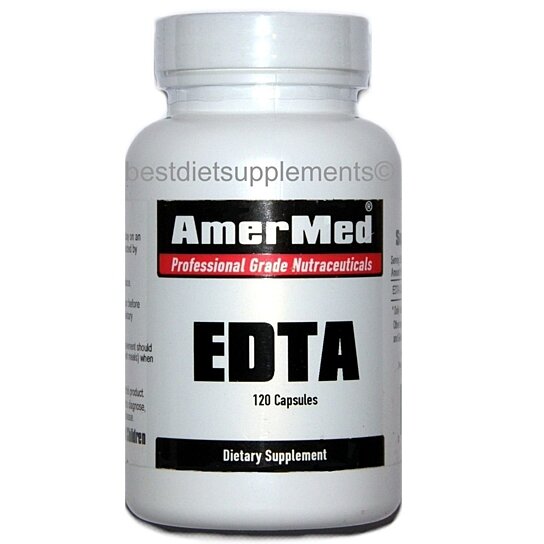
EDTA, the most widely used chelating agent in the world, is used to sequester trace metals to prevent catalytic reactions leading to rancidity, loss of flavor, and discoloration in food products and vitamins, and to control metals that destabilize cosmetics and pharmaceuticals. EDT A is used medically to remove toxic metals (e.g., lead in children) and in dental procedures.
An ideal chelator should have high solubility in water, resistance to biotransformation, ability to reach the sites of metal storage, retain chelating ability at the pH of body fluids and the property of forming metal complexes that are less toxic than the free metal ion.
Chelating agents