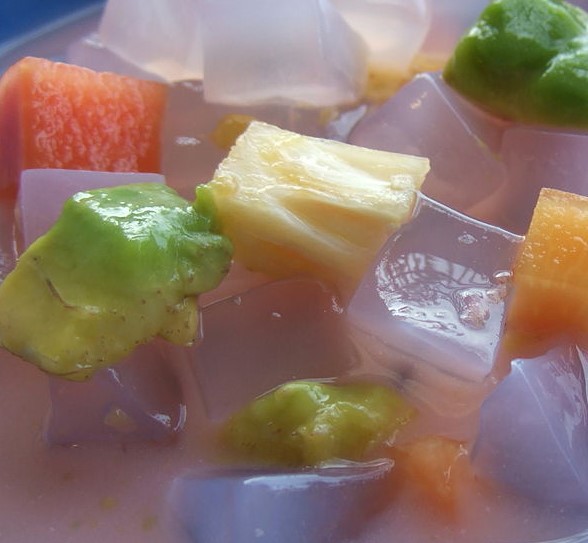
Gelatinization occurs when starch granules are heated in a liquid. It is responsible for the thickening of food systems. The process is an important physic-chemical change associated with the cooking of starchy materials.
When the liquid is heated, the hydrogen bonds holding the starch together weaken, allowing water to penetrate the starch molecules, causing them to swell until their peak thickness is reached.
During the gelatinization, water will be absorbed into the individual starch granules and held there tightly, actually becoming bound water. Bound water is no longer able to flow; the water that is bound in the granules causes granule themselves to swell significantly.
The gelatinizes starch mixtures are opaque and fragile and the ordered crystalline structure of starch is lost.
Gelatinization takes place over a temperature range that varies according to the source of starch and its amylose/amylopectin ratio.
The most important factors that affect the gelatinization temperature are:
*Type of starch
*Amount of tenderizer: sweeteners and fats
*Amount of acid
Food science is the study of food's composition, properties, and interactions with biological and chemical processes. It explores how food is processed, preserved, and safely consumed. By combining biology, chemistry, and nutrition, food science improves food quality, enhances flavor, and ensures safety for global consumption.
The Most Popular Post
-
Beginning in the 1990s, scientists embarked on a revolutionary journey by creating numerous genetically modified (GM) food varieties. This m...
-
Some bacteria are aerobic, that is, they require oxygen for growth. Other grow best when oxygen concentration is low (microaerophilus). Stil...
-
After alcoholic fermentation, aging is the next most major important stage of the wine production process. Aging changes the character of a...
-
Fruit jams, a delightful blend of preserved fruits and sugars, are typically canned or sealed for long-term storage. This preservation and p...
-
The anthoxanthins are glycosides which in boiling with dilute acid yield one or two molecules of monosaccharides and a flavones or a flavone...