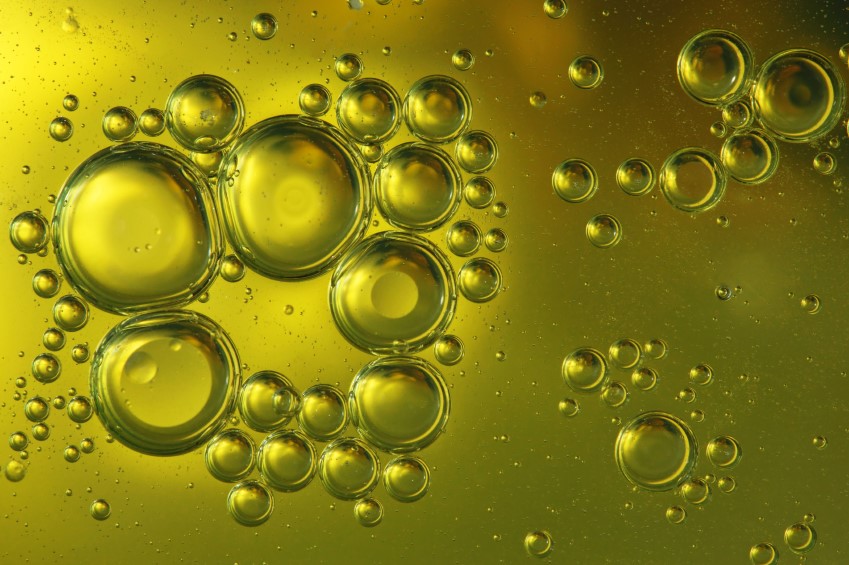
Emulsification is a “process” of making a metastable mixture like water and oil, which eventually separates into two phases in equilibrium.
A number of the emulsion systems are found in nature and human bodies; bile acid acts as an emulsifier to help digestion and absorption of fat by the formation of finely dispersed emulsion droplets, and lipoprotein forms an emulsion to deliver and metabolize fat in the body.
Emulsions are found in different industries such as food, pharmaceutical, agricultural, cosmetics, and petroleum. An emulsion is not contained only water and oil; it may also contain some solid particles and even gas.
A surfactant is a chemical substance that alters interfacial properties by absorbing to the boundary between two immiscible phases. The chemical structure of surfactant consists of hydrophilic and lipophilic groups. The lipophilic group of surfactant molecule tends to move away from the water molecules by so-called “hydrophobic interaction.”
Essentially, there are three types of emulsions which are:
*Water-in-oil (W/O),
*Oil-in-water (O/W), and
*Complex emulsions such as water-in-oil-in-water (W/O/W). The complex emulsion also known as a multiple emulsion
Other types of emulsions
*Microemulsions: Microemulsions are systems consisting of water, oil and surfactant, which constitute a single optically isotropic and thermodynamically stable liquid solution.
*Pickering emulsion: The solid particles in the colloidal size may be used as emulsion stabilizers. Such particles are known as pickering emulsion. Pickering emulsions are recently employed in many areas like cosmetics, food, pharmaceuticals, oil recovery and waste water treatment.
Three theories of emulsion:
*Surface Tension Theory: by lowering of interfacial tension
*Oriented Wedge Theory: mono molecular layers of emulsifying agents are curved around a droplet of the internal phase of the emulsion
*Interfacial Film theory: A film of emulsifying agent prevents the contact and coalescing of the dispersed phase
Emulsification process