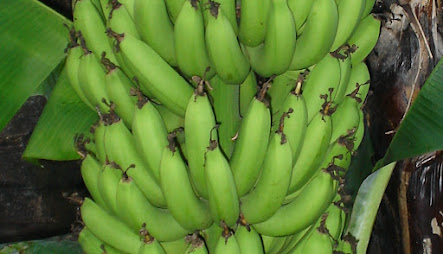
Ripened banana peel contains various types of compounds such as anthocyanins, delphinidin, cyaniding, and catecholamines.
Anthocyanin is one of the main sources for the attractive blue-violet-red-orange color of flowers and fruits and they have high color intensities to attract animals and thus promoting pollination and dispersion of seeds. Flavonols can interact with anthocyanins to modify the color of fruits and play a prominent role in protection against UV-B irradiation.
Anthocyanins (Greek anthos: flower and kyaneos: dark blue) represent a subclass of the phenolic compounds.
Anthocyanins are water-soluble glycosides of anthocyanidins compounds that provide color to plant tissues (leaves, stems, roots, flowers and fruits) ranging from red, purple to blue according to the environmental pH and their structural composition.
In general, anthocyanins are non-photosynthetic pigments synthesized in the cytoplasm and stored in the vacuolar lumen of epidermal cells.
Anthocyanins not only play an important role in reproduction, by attracting pollinators and seed dispersers, they also have function in protection against various abiotic and biotic stresses.
Anthocyanins are neuroprotective, anti-obesity and anti-diabetic. They also inhibit the growth of malignant cancerous cells, with anti-inflammatory and cardiovascular protection capacities.
Anthocyanins in banana